About Us

Image
Hero Image
Image
Hero Image

What is the EMG? 

The United Nations Environment Management Group (EMG) is an interagency coordination body that brings together UN entities to identify and address international environmental and human settlement issues that require joint action across the UN system. The Group pools its expertise, knowledge and resources to develop coherent global management responses to those issues in the form of UN Common Approaches, and system-wide strategies and analyses.

When did the Group form? 

In July 1999, the General Assembly adopted resolution 53/242 which supported the Secretary-General’s proposal to establish an environmental management group, outlined in his report on the Environment and Human Settlements (A/53/463). As a result, the EMG was established in 2001. 

What does the EMG do?

The EMG promotes collaboration within the UN system to enhance coherent support to Member States in addressing the triple planetary crisis of pollution, climate change and biodiversity loss. The group facilitates knowledge sharing, develops system-wide strategies, conducts mappings and gap analyses, and create implementation tools that strengthen the integration of environmental sustainability into the UN's policies, programs, and management practices

How does the Group operate? 

The EMG operates through a two-tiered structure:

  1. Senior Officials: The Head of each EMG member organization acts as a Senior Official within the EMG. The Senior Officials collectively form the EMG's decision-making body, which convenes at least once a year to discuss issues on the environmental agenda and to set the EMG’s annual programme of work. See more: EMG Governance
  2. Technical activities: In addition, each EMG member organization appoint one or more technical staff members, who serve as EMG Focal Points. The Focal Points are assigned activities by the EMG Senior Officials and coordinate their organization’s input to the EMG work streams. See more: Our Work

How does the EMG add value?

The EMG brings together knowledge and expertise on the environment in the UN system, synthesising information and tools for the easy reference by UN entities and other stakeholders. It highlights the strengths of each entity and helps prevent duplication of efforts, bridging sectors in addressing environmental challenges.  

The EMG plays an important role in creating multistakeholder coalitions and system-wide strategies on the environment that lead to more focused action, ultimately improving the UN system’s support for Member States.

Additionally, the EMG has played a significant role in shaping the corporate environmental sustainability agenda for the UN system, helping EMG members to advocate for stronger environmental action within their entities.

Maintaining relevance and efficiency over time

Since the EMGs establishment in 2001, the Group has undergone several reforms to address the evolving coordination challenges and respond to the emerging and intensifying global environmental issues. In 2015, the EMG conducted and produced the report “Maximising the Effectiveness of the EMG in the Context of the 2030 Agenda for Sustainable Development”. Following this, the EMG implemented the report’s recommendations and updated the EMG Terms of Reference. Between 2018 and 2022, the EMG project underwent an evaluation of its relevance, effectiveness, efficiency and sustainability. The findings and recommendations from this evaluation were published in 2023 and reviewed by EMG members in 2024 for implementation in the coming years. 

How is the Group administered?  

The Group is supported by a Secretariat provided by UN Environment Programme (UNEP). The Secretariat is located in Geneva, Switzerland. 
Content Wrapper
Text Components Section

What is the EMG?

Page Content Text

The United Nations Environment Management Group (EMG) is an interagency coordination body that brings together UN entities to identify and address international environmental and human settlement issues that require joint action across the UN system. The Group pools its expertise, knowledge and resources to develop coherent global management responses to those issues in the form of UN Common Approaches, and system-wide strategies and analyses.

Image Section
Image
Image : River flowing through mountain
What is the EMG?

The United Nations Environment Management Group (EMG) is an interagency coordination body that brings together UN entities to identify and address international environmental and human settlement issues that require joint action across the UN system. The Group pools its expertise, knowledge and resources to develop coherent global management responses to those issues in the form of UN Common Approaches, and system-wide strategies and analyses.

Page Content Text

Other text here

When did the Group form?

In July 1999, the General Assembly adopted resolution 53/242 which supported the Secretary-General’s proposal to establish an environmental management group, outlined in his report on the Environment and Human Settlements (A/53/463). As a result, the EMG was established in 2001.

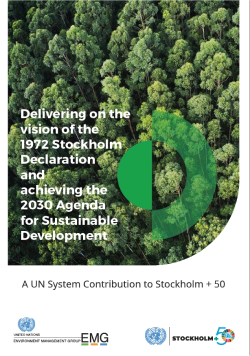
"Because environmental issues underpin so many of the Agenda’s goals, they provide many opportunities to align efforts within the United Nations, as well as with governments, scientists, the private sector, civil society and communities. That is why the 51 agencies in the United Nations Environment Management Group are converging their strategies, sharing their experiences and showing what works and where more must be done. The diverse examples highlighted in this report include joint initiatives on pollution, climate refugees and financing." António Guterres Secretary-General of the United Nations

António Guterres

Secretary-General of the United Nations

Content Wrapper

Our Members

Page Content Text

Lorem ipsum dolor sit amet, consectetur adipiscing elit. Donec sed est eleifend, malesuada orci in, iaculis purus. Etiam quis neque turpis. Aenean eu bibendum nunc. Vestibulum imperdiet, sapien non viverra tempor, tortor tortor commodo velit, quis volutpat urna turpis in tellus. 

51

Members

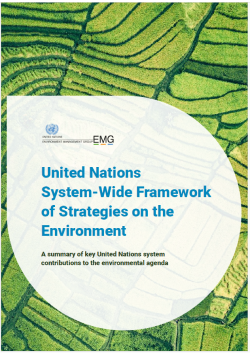
Guided by past and ongoing EMG processes, Stockholm+50 outcome and Common Agenda

Future Readiness

Making EMG future ready in support of an inclusive and strengthened international enviromental governance

Page Content Text

Based on the EMG’s Terms of Reference, this strategic narrative aims to guide and frame the work of the EMG in 2023-2030, taking into account the results of past and ongoing EMG processes, the findings and recommendations of the EMG reports to the Stockholm+50 International Meeting, the UN Secretary-General’s report. A number of specific issues will be addressed under three broad thematic areas which will have the flexibility to absorb new and emerging issues.

EMG Strategic Narrative 2023-2030 

Under each thematic area the EMG will seek to:
 

  • Enhance UN system coherence in addressing interlinked, intergenerational environmental crises of energy, biodiversity, climate, food and health;
  • Promote multilateral and multisectoral policy discussions and issue-based programming with respect to the international environmental and sustainable development agenda;
  • Prepare UN system-wide strategies and common approaches to promote policy coherence;
  • Prepare policy and normative guidance, guidelines and tools within the UN system;
  • Facilitate systematic approaches to data and knowledge aggregation and communication
  • Ensure alignment with existing UN action plans and issue-based coordination platforms;
  • Improve visibility and public awareness of the EMG, and position it as a platform for UN system knowledge sharing;
  • Support the CEB, HLCP, HLCM and the UN Development Cooperation Office in mainstreaming and implementing environmental priorities across UN policies, programming, management and operations, including in UN Country Teams
Content Wrapper

Test Heading

1

Test text 1

2

Test Text 2

3

Test Text 3

Content Wrapper

Nexus Dialogues

Text Section
Page Content Text

Lorem ipsum dolor sit amet, consectetur adipiscing elit. Duis vulputate semper mi sed consequat. Cras accumsan justo in dignissim convallis. Integer dignissim pulvinar porta. Fusce felis quam, feugiat nec venenatis elementum, imperdiet sit amet magna. 

Content Wrapper
Text Components Section

Internal Sustainability

Page Content Text

Lorem ipsum dolor sit amet, consectetur adipiscing elit. Duis vulputate semper mi sed consequat. Cras accumsan justo in dignissim convallis. Integer dignissim pulvinar porta. Fusce felis quam, feugiat nec venenatis elementum, imperdiet sit amet magna. Quisque dui neque, congue non maximus at, faucibus molestie massa. In accumsan convallis ex, vitae malesuada eros tristique ut. Praesent varius porta mattis. Fusce accumsan augue et diam congue aliquet.

Image Section
Image
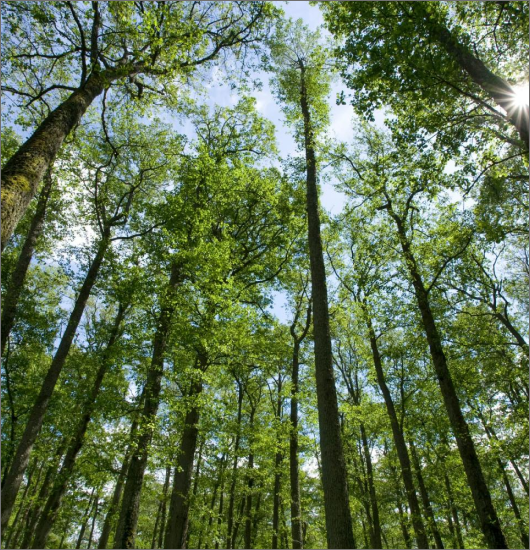
Forest

Resources